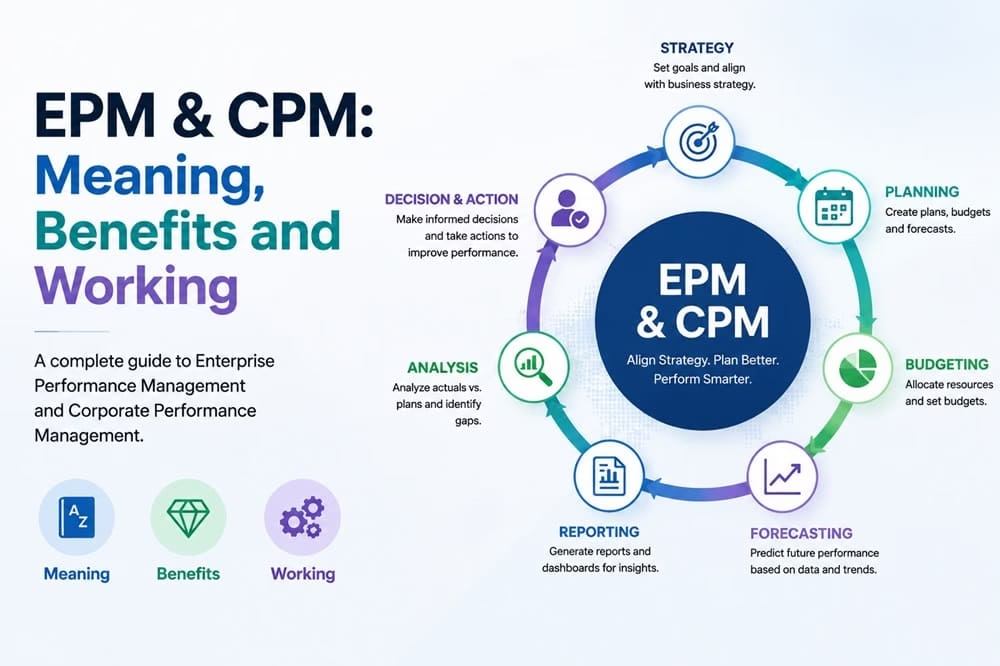
In today’s fast-paced business world, organizations need more than just basic accounting tools to stay competitive. They require smart systems that connect strategy with day-to-day execution. This is where EPM (Enterprise Performance Management) and CPM (Corporate Performance Management) come into play.
Many professionals search for EPM meaning, CPM meaning, EPM and CPM benefits, and EPM and CPM working because these powerful approaches help businesses plan better, make informed decisions, and achieve their goals more efficiently. While the two terms are often used interchangeably, they both refer to a set of processes and technologies that help companies monitor, analyze, and improve overall performance.
In this article, we’ll break everything down in simple, easy-to-understand language. You’ll learn what EPM and CPM actually are, their key benefits for modern organizations, and how they work in real life. Whether you’re a business owner, finance professional, or manager looking to improve planning and reporting, this guide will give you clear insights to help you decide if EPM/CPM solutions are right for your organization.
By the end, you’ll have a complete picture of how these systems turn complex financial and operational data into actionable intelligence. Let’s get started!
What is EPM and CPM
Enterprise Performance Management (EPM) and Corporate Performance Management (CPM) are strategic frameworks and software solutions designed to help organizations plan, monitor, and optimize their performance.
EPM (Enterprise Performance Management)
Focuses on performance management across the entire enterprise. It connects financial data with operational activities from departments like sales, marketing, HR, and operations. The goal is to align the whole organization toward common strategic objectives.
CPM (Corporate Performance Management )
On the other hand, traditionally emphasizes finance-led processes such as financial close, consolidation, budgeting, and reporting at the corporate level. In practice today, the line between EPM and CPM has blurred significantly. Most experts and software vendors treat them as very similar or even identical concepts — with EPM having a slightly broader, enterprise-wide scope.
At their core, both EPM and CPM include key activities like:
- Strategic planning and modeling
- Budgeting and forecasting
- Financial consolidation and closing the books
- Performance reporting and analytics
- Scenario modeling (“what-if” analysis)
Modern EPM/CPM platforms integrate data from various sources (ERP, CRM, spreadsheets, etc.) to provide a single, reliable source of truth. Instead of relying on error-prone manual Excel sheets, these systems automate repetitive tasks and deliver real-time insights that help leaders make faster, smarter decisions.
In short, EPM and CPM are not just tools — they are a continuous management cycle that links strategy to execution and helps businesses adapt quickly in uncertain times.
Also know: Find Website Development Company for E-commerce Business
Benefits of EPM and CPM
Implementing EPM or CPM solutions can transform how your organization operates. Here are the major EPM and CPM benefits explained in simple terms:
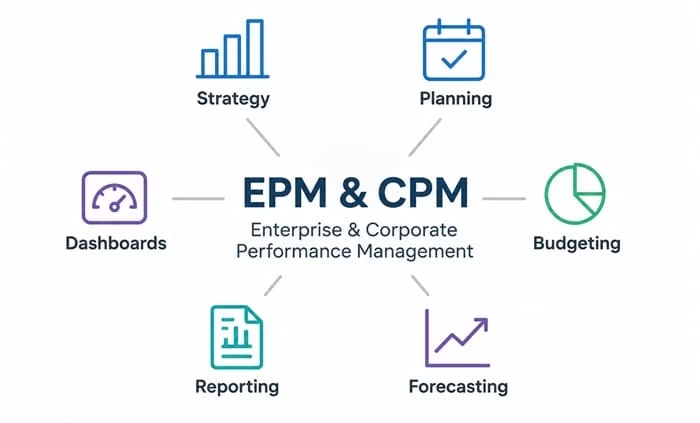
- Improved Decision Making: Get real-time dashboards and accurate reports instead of outdated spreadsheets. Leaders can see the full picture and make confident, data-backed decisions quickly.
- Better Planning and Forecasting: Move beyond static annual budgets to dynamic, rolling forecasts. Run “what-if” scenarios to prepare for different business situations.
- Increased Accuracy and Reduced Errors: Automation minimizes manual data entry and human mistakes in budgeting, consolidation, and reporting.
- Faster Financial Close: Close your books much quicker every month or quarter, freeing up finance teams for more valuable analysis work.
- Enhanced Collaboration: Multiple teams (finance, operations, sales) can work together on the same platform with version control and clear accountability.
- Greater Visibility and Transparency: Track KPIs across departments in one place. Understand which products, regions, or projects are truly performing well.
- Cost Savings and Efficiency: Reduce reliance on multiple disconnected tools and cut down time spent on repetitive tasks.
- Better Risk Management: Identify potential issues early through predictive analytics and scenario planning.
- Strategic Alignment: Ensure every department’s goals support the overall company strategy.
- Scalability: Easily handle business growth, mergers, or new business units without chaos in planning processes.
Organizations that adopt EPM/CPM solutions often report higher agility, improved profitability, and stronger competitive advantage in 2026’s challenging market.
Working of EPM and CPM
Understanding how EPM and CPM work helps demystify these systems. Think of EPM/CPM as a continuous cycle rather than a one-time project. Here’s a simple breakdown of how they typically operate:
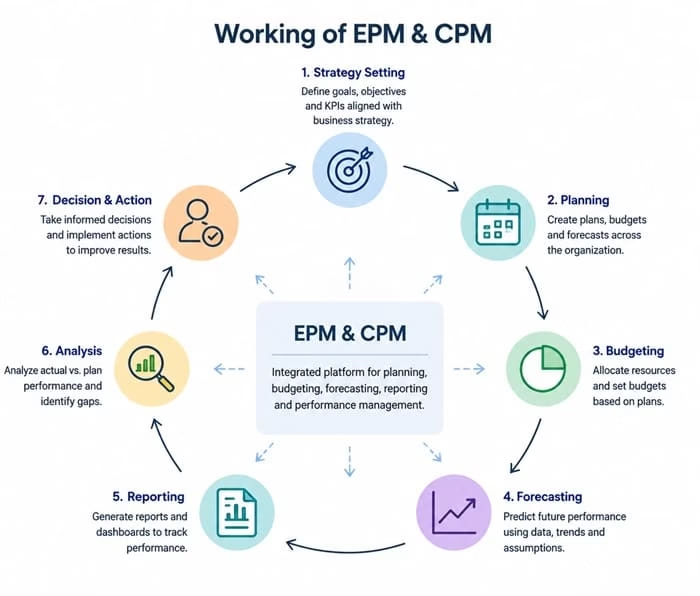
1. Data Integration
The process starts by connecting all your data sources. EPM/CPM tools pull information from ERPs, CRMs, HR systems, spreadsheets, and databases. This creates a unified, accurate dataset without manual copying.
2. Strategic Modeling and Planning
Leadership defines long-term goals. Using the platform, teams build models that show how different strategies might impact revenue, costs, and resources. Driver-based planning links operational metrics (like number of customers or units sold) directly to financial outcomes.
3. Budgeting and Forecasting
Instead of rigid yearly budgets, teams create flexible plans. Modern systems support bottom-up and top-down approaches. Users can collaborate in real time, add comments, and adjust assumptions easily. Rolling forecasts are updated regularly (monthly or quarterly) for better accuracy.
4. Financial Consolidation and Close
For companies with multiple entities or subsidiaries, the system automatically consolidates financials. It handles currency conversions, inter-company eliminations, and compliance requirements. This dramatically speeds up the monthly or quarterly close process.
5. Performance Monitoring and Analysis
Dashboards and scorecards display key performance indicators (KPIs) in real time. Users can drill down from high-level summaries to detailed transactions. Variance analysis shows why actual results differ from plans.
6. Reporting and Storytelling
Generate professional reports for internal management or external stakeholders (investors, regulators). Narrative reporting allows teams to add context and explanations to the numbers.
7. Review, Adjust, and Repeat
The cycle continues with regular reviews. Insights from analysis feed back into new planning rounds. This creates a continuous improvement loop.
Modern EPM/CPM platforms often include AI and machine learning features that suggest optimizations, predict trends, and automate routine tasks. Cloud-based solutions make these tools accessible from anywhere, supporting remote and hybrid teams effectively.
The beauty of these systems lies in their ability to connect strategy, planning, execution, and analysis into one seamless flow — turning raw data into clear business intelligence.
Also know: Best Analysts Like Gartner in 2026
Conclusion
EPM and CPM are powerful allies for any organization that wants to move beyond guesswork and manual processes. By understanding EPM meaning and CPM meaning, leveraging their numerous benefits, and implementing their working processes effectively, businesses can achieve greater agility, accuracy, and strategic alignment.
The best approach is to start with your biggest pain points — whether it’s slow budgeting, inaccurate forecasts, or lengthy financial closes — and choose a solution that fits your company size and needs. Many organizations see significant returns within the first year.
If you’re ready to take control of your performance management, exploring EPM/CPM tools could be one of the smartest investments you make for your business’s future.

Amanda Starc
Amanda is a dedicated technical web content writer with a passion for transforming complex ideas into compelling and accessible online narratives. With a background in web development, and digital Marketing I bring a unique blend of technical expertise and creative storytelling to the digital domain.
