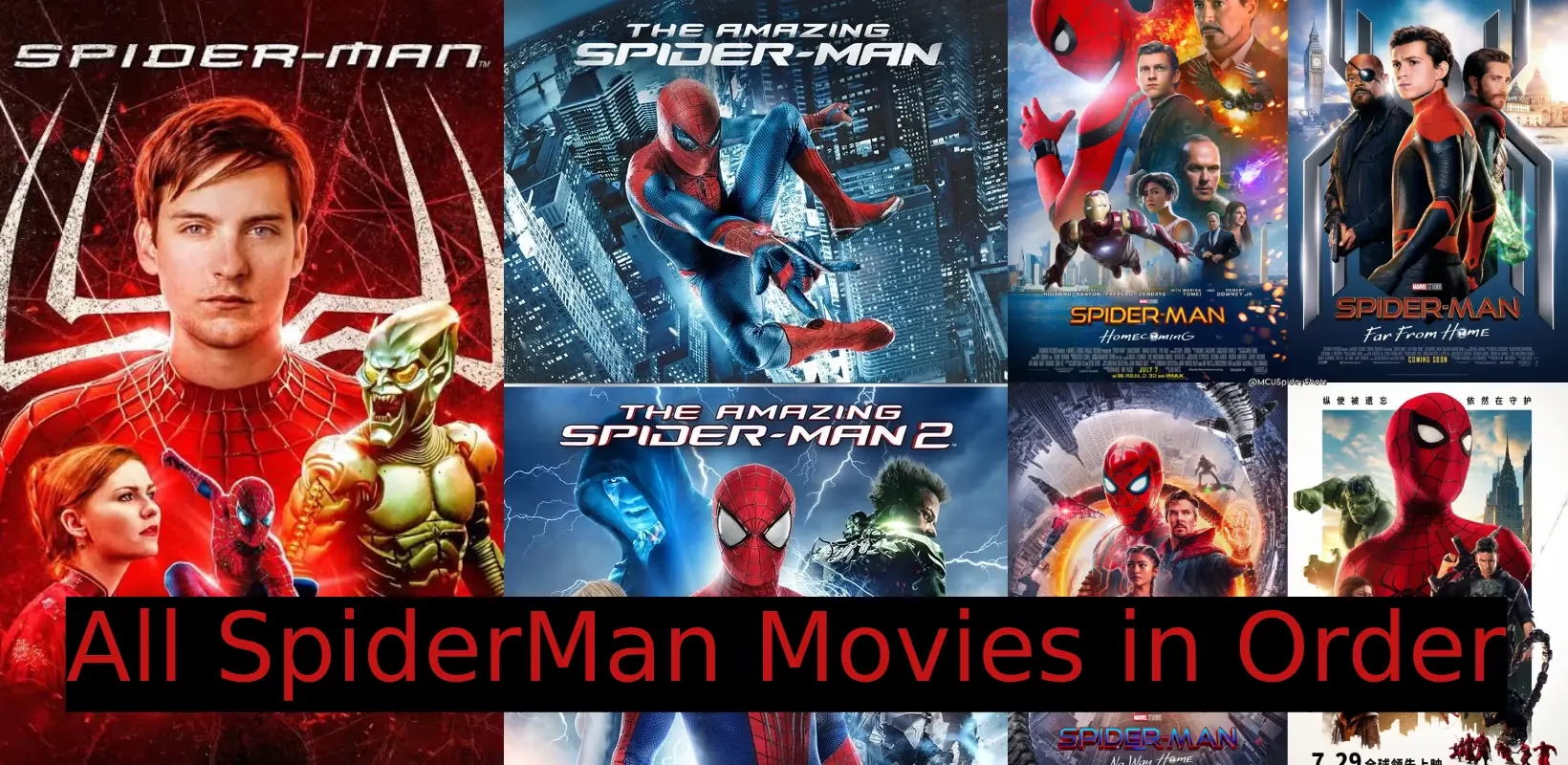
Spider-Man has swung across the big screen for more than two decades. Different actors, different directors, and even different universes have told the story of Peter Parker and his web-slinging alter ego. Fans often ask the same question: what is the best way to watch every Spider-Man movie in order?
This guide lists every major theatrical Spider-Man film in release order. It covers the Tobey Maguire trilogy, the Andrew Garfield reboot, Tom Holland’s MCU journey, and the animated Spider-Verse films. You will also find clear notes on where the character appears in other Marvel movies. The list stays current through 2026 and keeps the focus on official releases that feature Spider-Man as a central figure.
Character Rights and Studio Ownership
The Spider-Man character was created by Stan Lee and Steve Ditko and is owned by Marvel Comics (now under Disney). However, the live-action film rights for solo Spider-Man movies have belonged to Sony Pictures since the late 1990s.
- Tobey Maguire and Andrew Garfield films are fully produced and owned by Sony Pictures.
- Tom Holland’s Spider-Man appears in the Marvel Cinematic Universe through a special co-production deal between Sony Pictures and Marvel Studios (Disney). Sony still owns the solo film rights, while Marvel Studios handles the MCU integration.
- The animated Spider-Verse films are produced by Sony Pictures Animation.
- Related films such as the Venom series belong to Sony’s Spider-Man Universe (SSU) and exist in a mostly separate continuity.
These rights explain why the different Spider-Man versions stayed separate until multiverse stories brought them together.
How to Watch All Spider-Man Movies in Order: Complete Guide
Release order remains the simplest path for most viewers. It lets you experience each film the way audiences first saw it and avoids timeline confusion across separate universes. Chronological order works best within each series or when following the MCU specifically.
Tobey Maguire Era: The Original Trilogy (Sony Pictures)
Sam Raimi launched the modern Spider-Man film series with a colorful, heartfelt take on the character. Tobey Maguire played a shy, earnest Peter Parker who balanced school, work, and heroism. These three films still feel foundational for many fans.
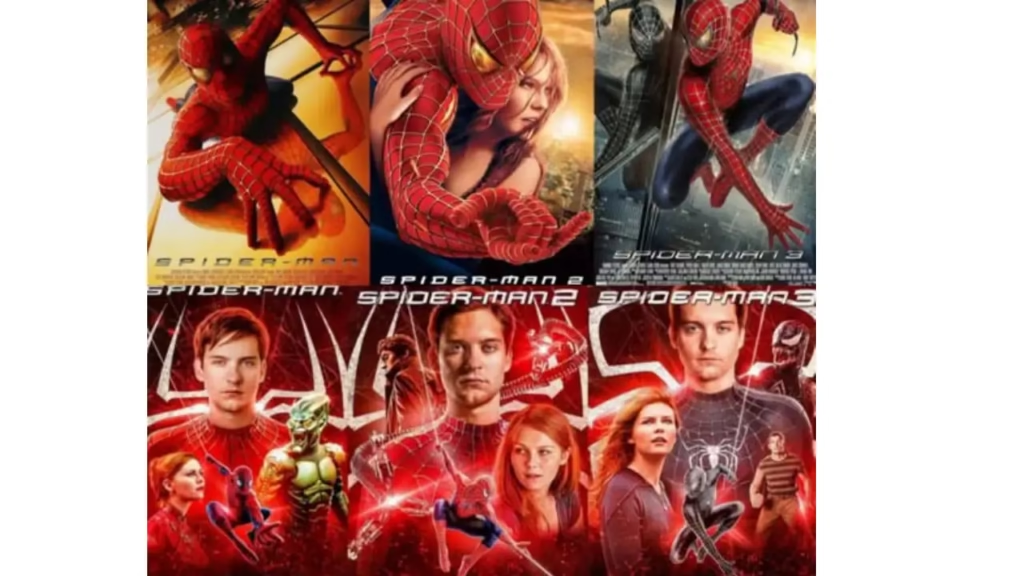
- Spider-Man (2002) Peter Parker gets bitten by a genetically altered spider and learns the hard lesson that with great power comes great responsibility. Willem Dafoe’s Green Goblin becomes the first major threat. The movie set box-office records and proved superhero films could succeed on a large scale.
- Spider-Man 2 (2004) Peter struggles with the cost of being Spider-Man while Doctor Octopus (Alfred Molina) threatens New York. Many consider this the strongest entry of the trilogy thanks to its emotional depth and inventive action.
- Spider-Man 3 (2007) Peter faces Sandman, a new Goblin, and the alien symbiote that turns him darker. The film closes the Raimi trilogy on a crowded but memorable note.
Andrew Garfield Era: The Amazing Spider-Man Films (Sony Pictures)
Sony rebooted the franchise only five years later. Marc Webb directed a more grounded, mystery-driven version starring Andrew Garfield as a slightly older and more impulsive Peter Parker.
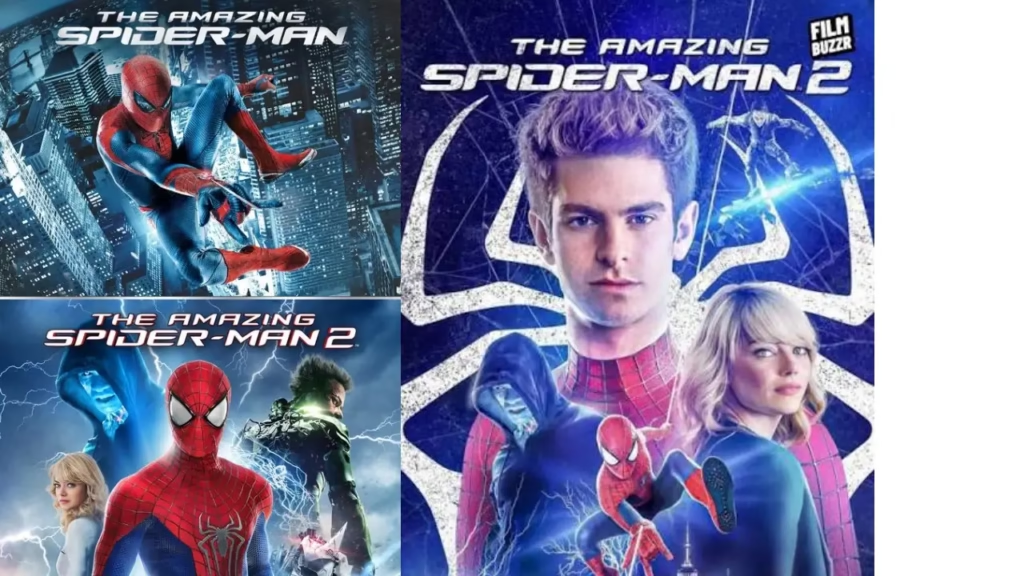
- The Amazing Spider-Man (2012) Peter investigates his parents’ past while learning to control his new powers. Emma Stone co-stars as Gwen Stacy, and Rhys Ifans plays the Lizard.
- The Amazing Spider-Man 2 (2014) Peter battles Electro (Jamie Foxx) and deals with the return of Harry Osborn. The film ends the short-lived series on an emotional high and low.
Tom Holland Era: The Marvel Cinematic Universe Films (Sony + Marvel Studios)
Tom Holland’s Spider-Man entered the MCU through a deal between Sony and Marvel Studios. His version is younger, funnier, and fully integrated with other heroes. These are the core solo films in release order.
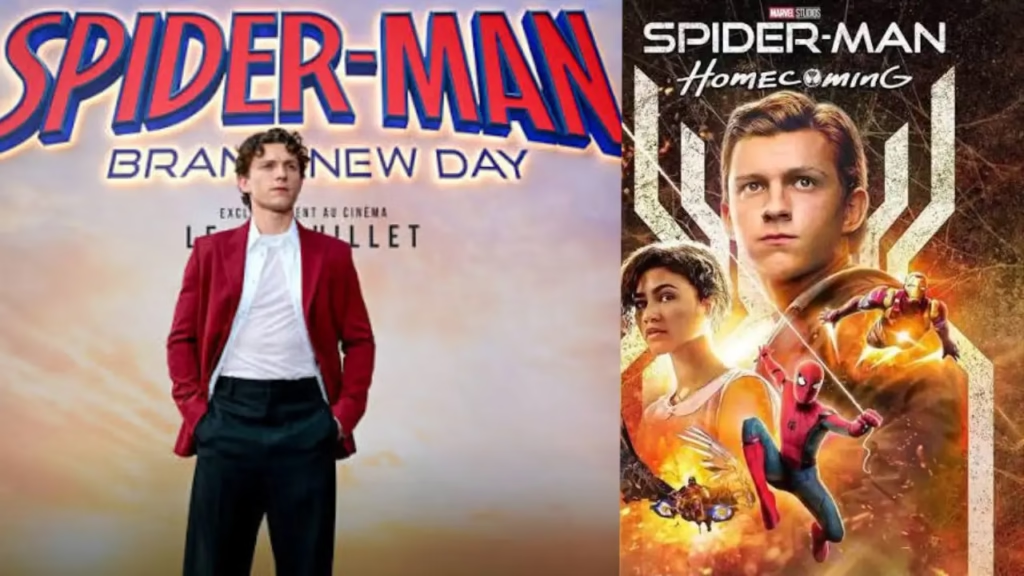
- Spider-Man: Homecoming (2017) High-school student Peter tries to prove himself to Tony Stark while stopping the Vulture (Michael Keaton). The movie mixes teenage life with superhero action in a fresh way.
- Spider-Man: Far From Home (2019) After the events of Endgame, Peter travels to Europe with his classmates and meets the mysterious Mysterio (Jake Gyllenhaal). The story explores fame, trust, and the weight of legacy.
- Spider-Man: No Way Home (2021) Peter’s identity becomes public. A spell gone wrong pulls in villains and Spider-Men from other universes. Tobey Maguire and Andrew Garfield return for a landmark multiverse team-up.
- Spider-Man: Brand New Day (2026) The latest solo film continues Peter’s story years after the spell that made the world forget him. New threats and familiar faces shape the next chapter of Holland’s run.
Also know: Resident Evil Games in Order
Animated Spider-Verse Films (Sony Pictures Animation)
These movies stand apart yet connect to the larger multiverse idea. They focus mainly on Miles Morales and celebrate every version of Spider-Man across realities.
- Spider-Man: Into the Spider-Verse (2018) Miles Morales becomes Spider-Man and teams up with other spider-heroes from different dimensions. The film won the Academy Award for Best Animated Feature and reset expectations for comic-book animation.
- Spider-Man: Across the Spider-Verse (2023) Miles faces the Spider-Society and a threat that spans the multiverse. The sequel expands the visual style and emotional stakes while setting up the next chapter.
Extra Appearances Worth Noting
Tom Holland’s Spider-Man first appears in Captain America: Civil War (2016). He also plays key roles in Avengers: Infinity War (2018) and Avengers: Endgame (2019). These films are not solo Spider-Man movies but add important context to his MCU story.
Sony has released several related films under the Spider-Man Universe banner (Venom series, Morbius, Madame Web, Kraven the Hunter). They share the same publishing space yet rarely feature Spider-Man himself and exist in a separate continuity for most of their run.
Best Ways to Watch the Series
Release Order (Simplest for First-Time Viewers)
- Spider-Man (2002)
- Spider-Man 2 (2004)
- Spider-Man 3 (2007)
- The Amazing Spider-Man (2012)
- The Amazing Spider-Man 2 (2014)
- Spider-Man: Homecoming (2017)
- Spider-Man: Into the Spider-Verse (2018)
- Spider-Man: Far From Home (2019)
- Spider-Man: No Way Home (2021)
- Spider-Man: Across the Spider-Verse (2023)
- Spider-Man: Brand New Day (2026)
Full Chronological Order by Story Events (Recommended Complete List) Because the live-action versions exist in separate universes until the multiverse stories connect them, a single strict timeline is not possible. This order follows internal story chronology within each series and places the multiverse crossovers correctly:
- Spider-Man (2002)
- Spider-Man 2 (2004)
- Spider-Man 3 (2007)
- The Amazing Spider-Man (2012)
- The Amazing Spider-Man 2 (2014)
- Captain America: Civil War (2016) – Tom Holland’s first appearance
- Spider-Man: Homecoming (2017)
- Avengers: Infinity War (2018)
- Spider-Man: Into the Spider-Verse (2018)
- Avengers: Endgame (2019)
- Spider-Man: Far From Home (2019)
- Spider-Man: No Way Home (2021) – Multiverse crossover that links the three live-action Peters
- Spider-Man: Across the Spider-Verse (2023)
- Spider-Man: Brand New Day (2026)
MCU-Only Chronological Order (Tom Holland Focus)
- Captain America: Civil War (2016)
- Spider-Man: Homecoming (2017)
- Avengers: Infinity War (2018)
- Avengers: Endgame (2019)
- Spider-Man: Far From Home (2019)
- Spider-Man: No Way Home (2021)
- Spider-Man: Brand New Day (2026)
For Multiverse Fans Watch the Tobey Maguire trilogy first, then the Andrew Garfield films, followed by the full MCU list above, and finish with both Spider-Verse movies. This order gives the strongest emotional payoff when the different Peters meet.
Also know: All Transformer Movies in Order
Conclusion
Every Spider-Man movie in order tells a bigger story about responsibility, identity, and growing up under impossible pressure. From Tobey Maguire’s sincere hero in 2002 to Tom Holland’s still-developing Peter in 2026, and from live-action reboots to the vibrant Spider-Verse, the character keeps finding new ways to swing into theaters.
Sony Pictures holds the core film rights while Marvel Studios (Disney) partners on the MCU entries. Understanding these ownership details helps explain why the versions stayed separate for so long and why the multiverse stories feel special when they finally connect.
Start with the original 2002 film if you want the full journey. Jump straight to the MCU chronological list if you prefer the current version. Either way, you will find action, humor, and heart that have kept audiences coming back for more than twenty years. The web still holds strong.
FAQs
Q1. What is the correct order to watch all Spider-Man movies?
Release order is the most straightforward for first-time viewers. For story flow, use the full chronological list that places the MCU appearances and multiverse events in the right sequence.
Q2. Who owns the rights to Spider-Man movies?
Marvel Comics (Disney) owns the character. Sony Pictures owns the live-action solo film rights. Tom Holland’s films are a joint production between Sony and Marvel Studios.
Q3. Do I need to watch the Tobey Maguire and Andrew Garfield movies before No Way Home?
You can enjoy No Way Home without them, but the emotional payoff lands much harder if you have seen the earlier versions of Peter Parker first.

Amanda Starc
Amanda is a dedicated technical web content writer with a passion for transforming complex ideas into compelling and accessible online narratives. With a background in web development, and digital Marketing I bring a unique blend of technical expertise and creative storytelling to the digital domain.
