
Let me be honest with you. Software teams right now are under real pressure. Features get pushed out faster than ever, users expect everything to just work perfectly on the first try, and even one hidden bug can turn into lost trust or costly headaches down the line. The old way of leaving testing until the very end feels completely outdated. Issues pop up too late, fixes drag on forever, and the whole team ends up drained and frustrated.
I have sat with many teams at avsoftlab and watched this exact struggle play out. That is why I wrote this guide. We are going to face these challenges together and walk through practical software testing strategies that smart teams are using successfully in 2026. You will discover how to spot problems earlier, make the most of helpful tools, and combine smart automation with genuine human judgment. By the time you finish reading, you will walk away with realistic ideas you can start applying right away. Ideas that help you build more reliable software and actually enjoy the process a little more.
Best Software Testing Strategies in 2026
The software testing landscape has shifted. Quality is no longer a final checkpoint. It weaves into every stage of development. Teams now prevent issues instead of just finding them. They harness AI for speed while keeping human insight at the core. In 2026, successful strategies emphasize prevention, intelligence, and continuous feedback. They help organizations ship faster with greater confidence.
Adopting these strategies takes thought. Start by assessing your current process. Identify pain points like late-stage bugs or maintenance-heavy scripts. Then pick one or two areas to improve first. Build from there. The payoff includes fewer production incidents, happier teams, and products users love.
1. AI-Driven and Autonomous Testing
AI has become a reliable partner in testing, not a replacement for people. It handles repetitive work, spots patterns humans might miss, and adapts when applications change. In 2026, autonomous agents generate test cases, execute them, and even heal scripts when UI elements shift.
This strategy shines for regression suites and complex scenarios. It frees testers to focus on creative, high-value work.
Here is how to implement it step by step:
- Assess your existing test suite. Identify stable, repetitive tests that break often due to minor changes.
- Choose AI-powered tools that fit your tech stack. Look for platforms offering self-healing locators and intent-based test creation.
- Train the AI with historical data. Feed it past defects, test runs, and application behavior so it learns your unique risks.
- Start small. Pilot autonomous test generation on one module or feature. Measure coverage and false positives before expanding.
- Integrate with your CI/CD pipeline. Set triggers so AI runs relevant tests on every code commit.
- Review and refine outputs regularly. Human oversight ensures the AI aligns with business goals and catches edge cases it might overlook.
- Monitor metrics like test maintenance time and defect detection rate. Adjust models as your application evolves.
Teams using this approach often cut manual effort significantly while improving coverage. Remember to treat AI as an assistant. Combine its speed with your domain knowledge for the best results.
Also know: Angular vs. React vs. Vue: Comparison Guide in 2026
2. Shift-Left Testing
Shift-left means bringing testing as early as possible. Instead of waiting for completed code, you validate ideas during requirements, design, and early coding. This catches misunderstandings before they become expensive fixes.
Early testing prevents defects from snowballing. It fosters closer collaboration between developers, testers, and product owners.
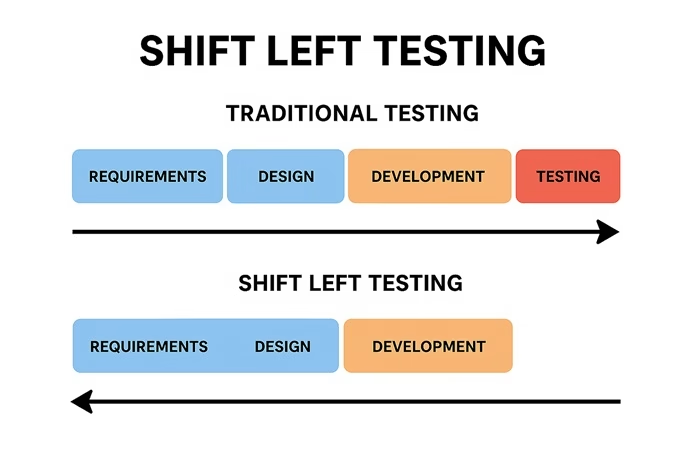
Follow these steps to make shift-left work:
- Involve testers in requirement reviews and user story refinement. Write acceptance criteria that are testable from day one.
- Use behavior-driven development (BDD) tools. Create living documentation that doubles as automated tests.
- Encourage developers to run unit and integration tests locally before pushing code.
- Set up preview environments or feature flags. Test small changes in realistic settings without full deployments.
- Implement static code analysis and security scans right in the IDE.
- Hold regular cross-functional sessions. Discuss potential risks and how to validate them early.
- Track early defect discovery rates. Celebrate when issues get resolved before they reach later stages.
This practice pays off quickly. Many teams report fewer post-release bugs and smoother sprints.
3. Shift-Right Testing
While shift-left focuses on prevention, shift-right gathers real-world insights after deployment. It uses production data, monitoring, and user feedback to validate performance and uncover unexpected behaviors.
This strategy complements earlier testing. It ensures your software performs well under actual load and usage patterns.
Implement it with these steps:
- Add robust monitoring and observability tools to production environments.
- Run A/B tests and canary releases. Compare different versions with real users.
- Analyze logs and user session recordings for anomalies or friction points.
- Collect structured feedback through in-app surveys and analytics.
- Feed production insights back into your test suites. Update automated tests to cover newly discovered scenarios.
- Set up alerts for performance degradation or error spikes.
- Review findings in retrospectives. Adjust development practices based on what you learn.
Shift-right turns users into indirect testers. It helps you evolve the product continuously.
Also know: Website Development: Complete Guide with Examples
4. Continuous Testing in CI/CD Pipelines
Testing never stops in modern pipelines. Every change triggers relevant checks, providing instant feedback. This keeps quality high without manual gates slowing things down.
Continuous testing integrates seamlessly with DevOps practices. It catches issues when they are cheapest to fix.
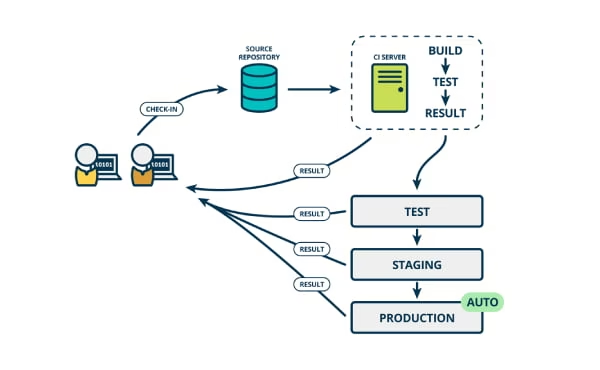
Build this capability like so:
- Map your CI/CD stages. Decide which tests run at each point, from fast unit checks to deeper end-to-end validations.
- Automate as much as possible. Prioritize tests that offer high value with low maintenance.
- Use test orchestration tools. They decide which tests to run based on code changes and risk.
- Parallelize test execution. Leverage cloud resources to keep feedback loops tight.
- Implement quality gates. Define thresholds for coverage, performance, and security before promoting builds.
- Monitor pipeline health. Track flakiness and fix unreliable tests promptly.
- Foster a culture where failing tests block merges until resolved.
Teams that master this deliver changes more confidently and frequently.
5. Risk-Based and Exploratory Testing
Not everything needs equal attention. Risk-based testing focuses effort where failure would hurt most. Exploratory testing adds creative human judgment to uncover hidden issues.
Together, they balance structured automation with insightful discovery.
Apply them using this approach:
- Identify risks early. Consider business impact, technical complexity, and usage frequency.
- Prioritize test cases according to risk levels. High-risk areas get more coverage and frequent runs.
- Schedule dedicated exploratory sessions. Give testers time to freely investigate without scripts.
- Use charters to guide exploration. Focus on specific areas like security, usability, or integrations.
- Document findings and convert valuable scenarios into automated tests.
- Review risk assessments after each release. Update priorities as the product and market change.
- Combine with AI to suggest new exploratory paths based on past defects.
This mix ensures efficiency without losing the human touch that finds tricky bugs.
6. Hyper Automation and Scriptless Testing
Hyper automation extends beyond basic scripts. It automates the entire quality lifecycle, including test creation, data management, and reporting. Scriptless tools let non-coders contribute effectively.
These advancements lower barriers and accelerate coverage.
Roll them out as follows:
- Evaluate scriptless platforms. Choose ones that support your applications and allow easy customization.
- Automate test data generation and environment setup.
- Build reusable components. Create modular flows that teams can combine for new scenarios.
- Integrate with AI for smarter test suggestions and maintenance.
- Train team members across roles. Developers, testers, and business users should collaborate on automation.
- Measure automation ROI. Track time saved, coverage gained, and defect prevention.
- Keep a balance. Retain manual oversight for complex or changing areas.
Also know: Find Website Development Company for E-commerce Business
7. Integrated Security and Performance Testing
Security and performance can no longer be afterthoughts. Embed them throughout the process with DevSecOps practices.
Protect your software while ensuring it scales smoothly.
Steps to follow:
- Include security scans in every pipeline stage.
- Perform regular penetration testing and code reviews focused on vulnerabilities.
- Test performance under realistic loads early and often.
- Use chaos engineering to simulate failures and build resilience.
- Validate accessibility and compliance requirements continuously.
- Monitor third-party dependencies for risks.
- Document and share learnings. Turn incidents into improved test coverage.
Conclusion
Effective software testing strategies in 2026 combine intelligence, speed, and collaboration. They move quality upstream, leverage AI wisely, and learn from real usage. No single approach fits every team. Experiment, measure results, and adapt to your context.
Start small. Pick one strategy that addresses your biggest pain point. Build momentum as you see improvements in speed, quality, and team morale. The goal remains the same: deliver software that works reliably and delights users. With these practices, you position your team for success in a fast-moving world. Keep learning, stay curious, and test smarter.

